
Skip to content
InnerLoopTherapy

Occupational Therapy

Building skills for everyday life and independence.

Our Occupational Therapists support children, young people and adults to develop the skills and strategies needed to participate more confidently in everyday activities.

An occupational therapist supporting a person to practise an everyday kitchen task in a bright home

Introduction

About Occupational Therapy

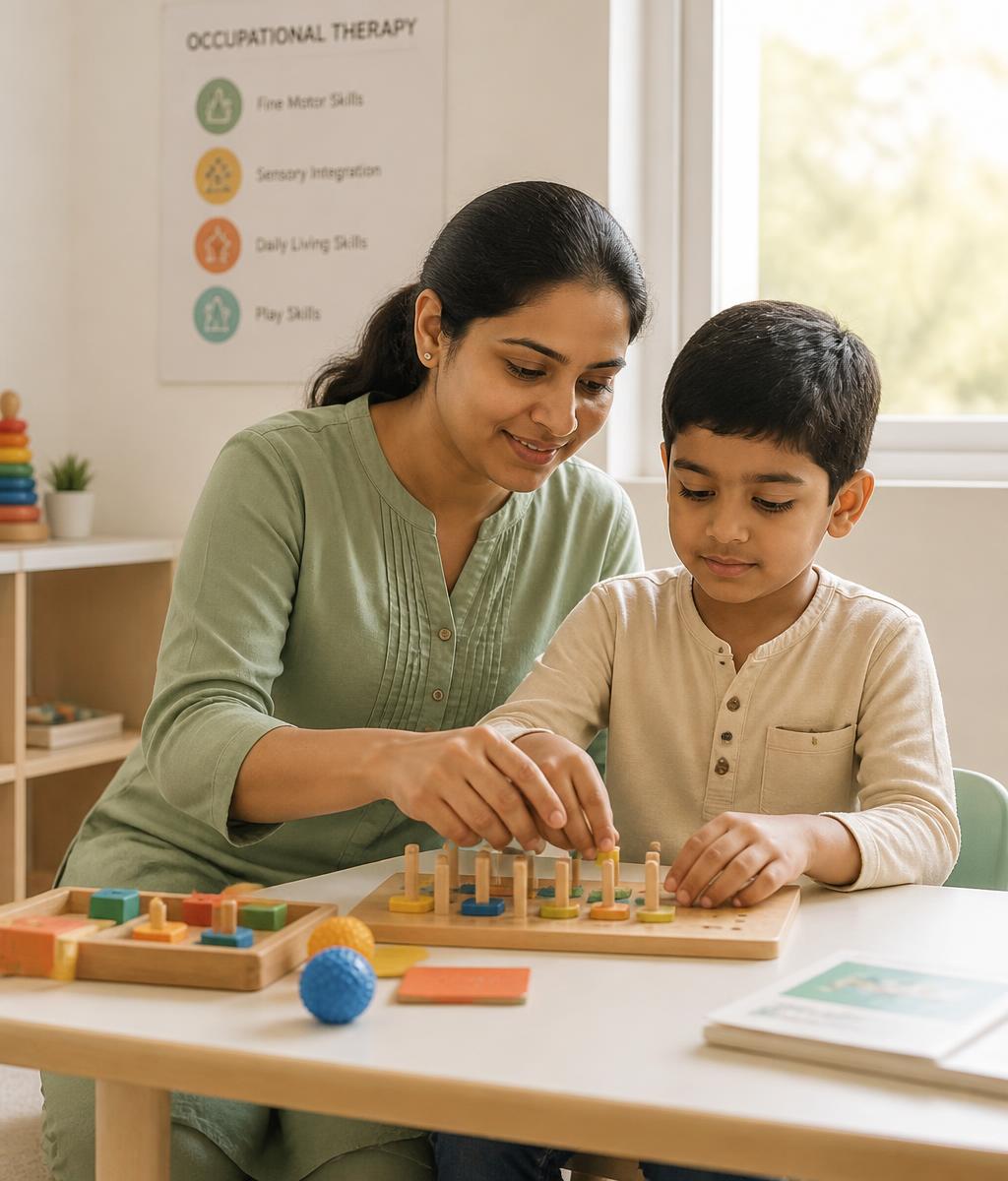
Occupational Therapy focuses on the everyday activities that matter to a person — getting ready in the morning, playing, learning, working, moving around the community and taking part in family life. Our therapists look at the person, the activity and the environment together, then build practical strategies that fit into real life.

Who we support

  • Children building play, learning and self-care skills
  • Young people developing independence and routines
  • Adults working towards functional and participation goals
  • Families and carers seeking practical everyday strategies

Areas of support

What support may include

  • Daily living skills
  • Fine motor development
  • Gross motor skills
  • Sensory processing
  • Emotional regulation
  • Functional capacity
  • School participation
  • Community participation
  • Assistive technology
  • Home and environmental assessments

How it helps

How this service can help

Everyday independence

We break everyday tasks into achievable steps and build the skills, routines and supports that make them manageable.

Participation at school and work

We work with schools, workplaces and support networks so strategies carry across the environments a person spends time in.

Environments that work

Where appropriate we assess home and community environments and recommend adjustments or assistive technology.

What to expect

Getting started, step by step

  1. 1. Getting to know you

    An initial conversation about your situation, your goals and what matters most to you or your family.

  2. 2. Assessment

    A functional assessment using observation, standardised tools where appropriate, and input from the people who know you best.

  3. 3. Goals and plan

    We agree on meaningful goals together and outline the support, frequency and strategies involved.

  4. 4. Ongoing support and review

    Regular sessions with practical strategies, plus review points to make sure the support is still the right fit.

Related services

Other ways our team can help

Speech Pathology

Helping people communicate, connect and participate.

Our Speech Pathologists support children and adults with communication, speech, language, social communication and swallowing needs.

  • Speech development
  • Language development
  • Social communication
  • Stuttering
  • AAC (augmentative and alternative communication)
Explore Speech Pathology

Psychology

Supporting emotional wellbeing and resilience.

Our Psychology services provide personalised support to help individuals understand and manage emotional, behavioural and psychological challenges.

  • Emotional regulation
  • Anxiety
  • Behavioural concerns
  • Self-esteem
  • Coping strategies
Explore Psychology

Positive Behaviour Support

Understanding behaviour and creating positive change.

Our Positive Behaviour Support team works with individuals, families and support networks to understand behaviour and develop practical, person-centred strategies.

  • Understanding behaviour
  • Communication
  • Emotional regulation
  • Positive strategies
  • Independence
Explore Positive Behaviour Support

We're here to help

Whether it's for you, your child or someone you care for

Our friendly intake team can help you understand our services, availability and next steps. There's no pressure — just a conversation.

Heal.Grow.Thrive.